A properly designed, built and furnished cage is one of the most important aspects of chameleon husbandry. The ideal cage should provide for the animals physical as well as their behavioral requirements.
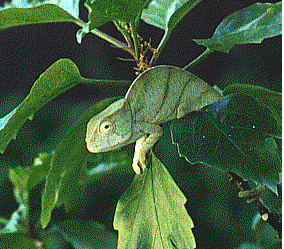 The essentials for a true chameleon cage are: 1) A large enough space so the animal may conduct all of its natural behaviors including, basking, hunting, feeding. It should also provide a variety of perching surfaces at different temperatures so the animal can regulate its body temperature by moving to an appropriate spot in the enclosure. 2) Good ventilation. Poor ventilation, like that found in a typical glass aquarium, will allow the air to become stagnant and provide an opportunity for fungus and bacteria to grow. These things can cause great problems for your chameleon. 3) Good lighting sources, including at least one incandescent basking light, one fluorescent full-spectrum light, and exposure to natural sunlight.
Although chameleons are slow-moving animals, they require a lot of space. They need this for their physical and emotional well-being. At least 2 sides and the top should be constructed of coated screen. Standard aluminum screen should be avoided, as should fiberglass screen. There have been reports of foot injuries in chameleons from these materials.
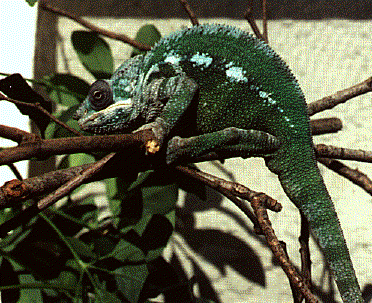 The cage should be furnished with branches of different diameters so that the lizard can easily navigate the entire cage. Live plants will provide good hiding places and add to the beauty of the enclosure. Because many chameleons are known for eating vegetable matter, only nontoxic plants should be planted in their enclosures.
>Hibiscus are ideal plants for true chameleon cages. They are beautiful, nontoxic plants which the lizards will love, for food and navigation. Pathos plants are also a good addition. Although they are considered mildly toxic, many reptiles, including some chameleons love them and have no negative side effects from eating them. One commonly recommended plant which should be avoided are ficus trees. These plants are mildly toxic and excrete a white milky substance. This secretion has been connected to a number of eye infections in captive chameleons. So this plant should be avoided.
The arrangements of lights, plants and branches should be such to allow for at least one basking site where the temperature will reach the upper limits of the animal's comfortable temperature range. Other basking sites with slightly cooler temperatures may also be built into the cage. The temperature in the rest of the enclosure should be still lower allowing the animal to thermoregulate by moving around the cage. Most chameleons do best with a 10 degree F to 15 degree F night time temperature drop .